|
|
|


| Of the Jealousy of Trade |
|
|
|
| Of the Jealousy of Trade |
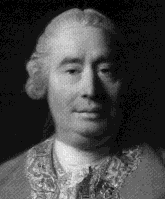
David Hume
Filósofo, economista e historiador escocês, nascido em 07 de maio de 1711, na cidade de Edinburgh. Falecido em 25 de agosto de 1776, em sua cidade natal, Edinburgh.
Principais Obras: "Tratado da Natureza Humana", "Ensaios Morais e Políticos", "Ensaios Filosóficos sobre o Entendimento Humano - Investigação sobre o Entendimento Humano", "Discursos Políticos", "Quatro Dissertações", "Do Comércio", entre outras.
Classicos-Economia@revistapraxis.cjb.net
(Texto Original em inglês)
Having endeavoured to remove one species of ill-founded jealousy, which is so prevalent among commercial nations, it may not be amiss to mention another, which seems equally groundless.
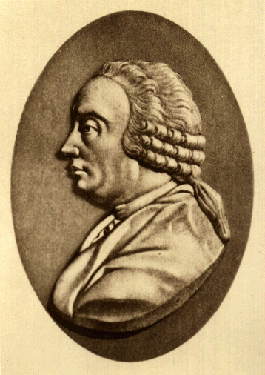
David Hume
CamafeuNothing is more usual, among states which have made some advances in commerce, than to look on the progress of their neighbours with a suspicious eye, to consider all trading states as their rivals, and to suppose that it is impossible for any of them to flourish, but at their expence. In opposition to this narrow and malignant opinion, I will venture to assert, that the encrease of riches and commerce in any one nation, instead of hurting, commonly promotes the riches and commerce of all its neighbours; and that a state can scarcely carry its trade and industry very far, where all the surrounding states are buried in ignorance, sloth, and barbarism.
It is obvious, that the domestic industry of a people cannot be hurt by the greatest prosperity of their neighbours; and as this branch of commerce is undoubtedly the most important in any extensive kingdom, we are so far removed from all reason of jealousy. But I go farther, and observe, that where an open communication is preserved among nations, it is impossible but the domestic industry of every one must receive an encrease from the improvements of the others.
Compare the situation of Great Britain at present, with what it was two centuries ago. All the arts both of agriculture and manufactures were then extremely rude and imperfect. Every improvement, which we have since made, has arisen from our imitation of foreigners; and we ought so far to esteem it happy, that they had previously made advances in arts and ingenuity. But this intercourse is still upheld to our great advantage:
Notwithstanding the advanced state of our manufactures, we daily adopt, in every art, the inventions and improvements of our neighbours. The commodity is first imported from abroad, to our great discontent, while we imagine that it drains us of our money: Afterwards, the art itself is gradually imported, to our visible advantage: Yet we continue still to repine, that our neighbours should possess any art, industry, and invention; forgetting that, had they not first instructed us, we should have been at present barbarians; and did they not still continue their instructions, the arts must fall into a state of languor, and lose that emulation and novelty, which contribute so much to their advancement.
The encrease of domestic industry lays the foundation of foreign commerce. Where a great number of commodities are raised and perfected for the home-market, there will always be found some which can be exported with advantage. But if our neighbours have no art or cultivation, they cannot take them; because they will have nothing to give in exchange. In this respect, states are in the same condition as individuals. A single man can scarcely be industrious, where all his fellow-citizens are idle. The riches of the several members of a community contribute to encrease my riches, whatever profession I may follow.
They consume the produce of my industry, and afford me the produce of theirs in return. Nor needs any state entertain apprehensions, that their neighbours will improve to such a degree in every art and manufacture, as to have no demand from them. Nature, by giving a diversity of geniuses, climates, and soils, to different nations, has secured their mutual intercourse and commerce, as long as they all remain industrious and civilized. Nay, the more the arts encrease in any state, the more will be its demands from its industrious neighbours.
The inhabitants, having become opulent and skilful, desire to have every commodity in the utmost perfection; and as they have plenty of commodities to give in exchange, they make large importations from every foreign country. The industry of the nations, from whom they import, receives encouragement: Their own is also encreased, by the sale of the commodities which they give in exchange. But what if a nation has any staple commodity, such as the woollen manufacture is in England? Must not the interfering of our neighbours in that manufacture be a loss to us? I answer, that, when any commodity is denominated the staple of a kingdom, it is supposed that this kingdom has some peculiar and natural advantages for raising the commodity; and if, notwithstanding these advantages, they lose such a manufacture, they ought to blame their own idleness, or bad government, not the industry of their neighbours.
It ought also to be considered, that, by the encrease of industry among the neighbouring nations, the consumption of every particular species of commodity is also encreased; and though foreign manufactures interfere with them in the market, the demand for their product may still continue, or even encrease. And should it diminish, ought the consequence to be esteemed so fatal? If the spirit of industry be preserved, it may easily be diverted from one branch to another; and the manufacturers of wool, for instance, be employed in linen, silk, iron, or any other commodities, for which there appears to be a demand. We need not apprehend, that all the objects of industry will be exhausted, or that our manufacturers, while they remain on an equal footing with those of our neighbours, will be in danger of wanting employment. The emulation among rival nations serves rather to keep industry alive in all of them:
And any people is happier who possess a variety of manufactures, than if they enjoyed one single great manufacture, in which they are all employed. Their situation is less precarious; and they will feel less sensibly those revolutions and uncertainties, to which every particular branch of commerce will always be exposed.
The only commercial state, that ought to dread the improvements and industry of their neighbours, is such a one as the Dutch, who enjoying no extent of land, nor possessing any number of native commodities, flourish only by their being the brokers, and factors, and carriers of others. Such a people may naturally apprehend, that, as soon as the neighbouring states come to know and pursue their interest, they will take into their own hands the management of their affairs, and deprive their brokers of that profit, which they formerly reaped from it. But though this consequence may naturally be dreaded, it is very long before it takes place; and by art and industry it may be warded off for many generations, if not wholly eluded.
The advantage of superior stocks and correspondence is so great, that it is not easily overcome; and as all the transactions encrease by the encrease of industry in the neighbouring states, even a people whose commerce stands on this precarious basis, may at first reap a considerable profit from the flourishing condition of their neighbours. The Dutch, having mortgaged all their revenues, make not such a figure in political transactions as formerly'. but their commerce is surely equal to what it was in the middle of the last century, when they were reckoned among the great powers of Europe. Were our narrow and malignant politics to meet with success, we should reduce all our neighbouring nations to the same state of sloth and ignorance that prevails in Morocco and the coast of Barbary. But what would be the consequence? They could send us no commodities: They could take none from us: Our domestic commerce itself would languish for want of emulation, example, and instruction: And we ourselves should soon fall into the same abject condition, to which we had reduced them. I shall therefore venture to acknowledge, that, not only as a man, but as a British subject, I pray for the flourishing commerce of Germany, Spain, Italy, and even France itself. I am at least certain, that Great Britain, and all those nations, would flourish more, did their sovereigns and ministers adopt such enlarged and benevolent sentiments towards each other.
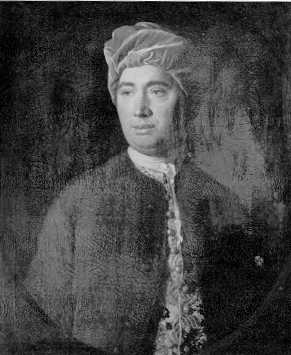
David Hume
Retrato
Caro Leitor, esperamos que a leitura desta obra de David Hume, um dos fundadores da Economia, pertencente à coleção dos Clássicos do Pensamento Universal da Revista Práxis na Internet, tenha sido proveitosa, instrutiva e agradável.
São permitidas a reprodução, distribuição e impressão deste texto com a devida e inalienável citação da sua origem. © Direitos reservados ao Autor, seus Herdeiros, seu Tradutor e seus Editores.
 Retornar ao início da página
 Clique aqui para acessar a Primeira Página da Revista Práxis na Internet.
Clique aqui para acessar a Lista de Clássicos do Pensamento Universal, apresentados pela Revista Práxis na Internet. 
Conheça o Conteúdo Completo da Revista Práxis na Internet, divisões por Temas, Obras e Autores.
Clique aqui para acessar a Lista de Artigos, Ensaios e Resenhas publicados pela Revista Práxis na Internet.
Clique aqui para acessar a Lista de Autores publicados pela Revista Práxis na Internet.
Clique aqui para acessar o Conteúdo por Assuntos da Revista Práxis na Internet.
Clique aqui para conhecer a Lista de Resenhas e Críticas Literárias publicadas pela Revista Práxis.
Clique aqui para acessar a Lista de Artigos e Trabalhos apresentados em Eventos promovidos com a participação da Revista Práxis.
Clique aqui para acessar o Banco de Imagens da Revista Práxis na Internet. São centenas de imagens, fotografias, filmes, discursos e falas originais que mostram o movimento ascendente dos povos. Com thumbnails (miniaturas de amostra). 
Clique aqui para participar de uma conversa ao vivo em nossa Sala de Bate-Papo on-line (Chat).
 Para contatar a Revista Práxis na Internet, mande um e-mail para rvpraxis@horizontes.net Gracias por su contacto. Your comments are important to us.
Para contatar o WebMaster da Revista Práxis na Internet, mande um e-mail para wmpraxis@horizontes.net.
|
|
Néliton Azevedo - Editor, WebMaster. © Revista Práxis, 2001.
Derechos Reservados. All rights reserved.