|
|
|


| Of Fortune |
|
|
|
| Of Fortune |
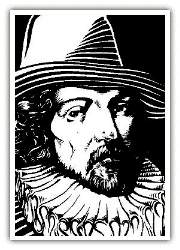
Francis Bacon
Barão de Verulam. Nascido em 22 de janeiro de 1581, na cidade de Londres, na Inglaterra de Elizabeth I. Falecido em 9 de abril de 1626, vítima de bronquite, em Londres. Seu pai influiu na sua formação em diplomacia e comportamento cortesão, sua mãe ensinou-lhe a teologia calvinista e a moral puritana. Diplomata, parlamentar, professor de Direito e Conselheiro da Côrte, sua vida pessoal mundana é um exemplo da moral burguesa de sua época. É conhecido como 'Pai do Empirismo', para Bacon, o Saber é um poderoso meio de conseguir o poder seguro sobre a Natureza, não tendo valor apenas em si mesmo.
Principais Obras: "Esclarecimentos acerca de imputações Relacionadas ao Recén-falecido Conde de Essex", "Da Proficiência e do Progresso do Saber Divino e Humano", "Grande Instauração", "Novum Organum", "Ensaios", "Pensamentos e Conclusõoes acerca da Interpretação da Natureza", "História Natural", "Sobre a Dignidade e Desenvolvimento das Ciências", "Sylva Sylvarum - Nova Atlântida", "De Dignitate et Augmentis Scientiarum", entre outras.
Of_Fortune@revistapraxis.cjb.net
(Texto Original em inglês)
It cannot be denied but outward accidents conduce much to fortune; favour, opportunity, death of others, occasion fitting virtue: but chiefly the mould of a man's fortune is in his own hands: Faber quisque fortunæ suæ, saith the poet; and the most frequent of external causes is that the folly of one man is the fortune of another; for no man prospers so suddenly as by others' errors. Serpens nisi serpentem comederit non fit draco. Overt and apparent virtues bring forth praise; but there be secret and hidden virtues that bring forth fortune; certain deliveries of a man's self which have no name. The Spanish name, disemboltura, partly expresseth them; when there be not stonds nor restiveness in a man's nature, but that the wheels of his mind keep way with the wheels of his fortune; for so Livy (after he had described Cato Major in these words, "In illo viro, tantum robur corp oris et animi fuit, ut quocunque loco natus esset fortunam sibi facturus videretur"), falleth upon that that he had versatile ingeniurn: therefore, if a man look sharply and attentively, he shall see Fortune; for though she be blind, yet she is not invisible. The way of Fortune is like the milken way in the sky; which is a meeting or knot of a number of small stars, not seen asunder, but giving light together: so are there a number of little and scarce discerned virtues, or rather faculties and customs, that make men fortunate. The Italians note some of them, such as a man would little think. When they speak of one that cannot do amiss, they will throw in into his other conditions, that he hath Poco di matto; and certainly there be not two more fortunate properties than to have a little of the fool, and not too much of the honest; therefore extreme lovers of their country or masters were never fortunate; neither can they be; for when a man placeth his thoughts without himself, he goeth not his own way. An hasty fortune maketh an enterpriser and remover; (the French hath it better, entreprenant or remuant); but the exercised fortune maketh the able man. Fortune is to be honoured and respected and it be but for her daughters, Confidence and Reputation; for those two Felicity breedeth; the first within a man's self, the latter in others towards him. All wise men, to decline the envy of their own virtues , use to ascribe them to [...]
Providence and Fortune; for so they may the better assume them: and, besides, it is greatness in a man to be the care of the higher powers. So Cæsar said to the pilot in the tempest, Cæsarem portas, et fortunam ejus. So Sylla chose the name of Felix and not of Magnus: and it hath been noted, that those who ascribe openly too much to their own wisdom and policy, end infortunate. It is written that Timotheus the Athenian, after he had, in the account he gave to the state of his government, often interlaced this speech, and in this Fortune had no part, never prospered in anything he undertook afterwards. Certainly there be whose fortunes are like Homer's verses, that have a slide h and easiness more than the verses of other poets; as Plutarch saith of Timoleon's fortune in respect of that of Agesilaus or Epaminondas: and that this should be, no doubt it is much in a man's self.
Caro Leitor, esperamos que a leitura deste texto de Francis Bacon, um dos Clássicos do Pensamento Universal, tenha sido proveitosa, instrutiva e agradável. Mande-nos um E-mail ou escreva-nos, dando suas impressões e comentários sobre o texto e sua apresentação. Ficaremos honrados em receber sua correspondência, também com suas críticas e comentários.
São permitidas a reprodução, distribuição e impressão deste texto com a devida e inalienável citação da sua origem. © Direitos reservados ao Autor, seus Herdeiros, seu Tradutor e seus Editores.
 Retornar ao início da página
 Clique aqui para acessar a Primeira Página da Revista Práxis na Internet.
Clique aqui para acessar a Lista de Clássicos do Pensamento Universal, apresentados pela Revista Práxis na Internet. 
Conheça o Conteúdo Completo da Revista Práxis na Internet, divisões por Temas, Obras e Autores.
Clique aqui para acessar a Lista de Artigos, Ensaios e Resenhas publicados pela Revista Práxis na Internet.
Clique aqui para acessar a Lista de Autores publicados pela Revista Práxis na Internet.
Clique aqui para acessar o Conteúdo por Assuntos da Revista Práxis na Internet.
Clique aqui para conhecer a Lista de Resenhas e Críticas Literárias publicadas pela Revista Práxis.
Clique aqui para acessar a Lista de Artigos e Trabalhos apresentados em Eventos promovidos com a participação da Revista Práxis.
Clique aqui para acessar o Banco de Imagens da Revista Práxis na Internet. São centenas de imagens, fotografias, filmes, discursos e falas originais que mostram o movimento ascendente dos povos. Com thumbnails (miniaturas de amostra). 
Clique aqui para participar de uma conversa ao vivo em nossa Sala de Bate-Papo on-line (Chat).
 Para contatar a Revista Práxis na Internet, mande um e-mail para rvpraxis@horizontes.net Gracias por su contacto. Your comments are important to us.
Para contatar o WebMaster da Revista Práxis na Internet, mande um e-mail para wmpraxis@horizontes.net.
|
|
Néliton Azevedo - Editor, WebMaster. © Revista Práxis, 2003.
Derechos Reservados. All rights reserved.